August 14, 2026
Guarding the Vault: The Definitive Guide to Data Privacy in the Age of AI
Guarding the Vault: The Definitive Guide to Data Privacy in the Age of AI The rapid integration of generative artificial intelligence into everyday workflows ha
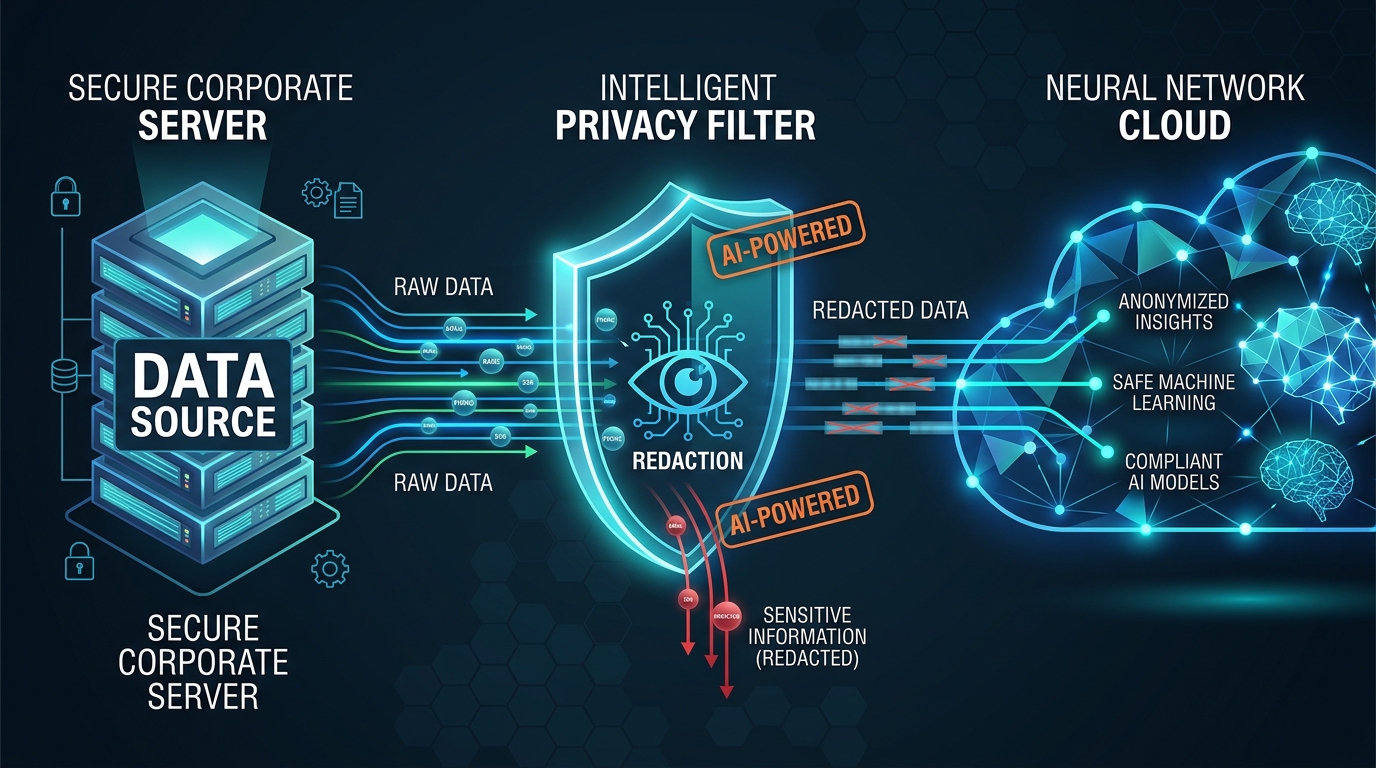
Guarding the Vault: The Definitive Guide to Data Privacy in the Age of AI
The rapid integration of generative artificial intelligence into everyday workflows has triggered a monumental shift in business productivity. Teams can now draft code, analyze financial spreadsheets, and generate marketing copy in seconds. Yet, this explosion of efficiency has brought with it an unprecedented data security crisis.
Every prompt sent to a public large language model (LLM) represents a potential data leak. Sensitive intellectual property, proprietary source code, patient health information, and confidential financial forecasts are routinely fed into external servers.
Without a clear, actionable strategy, organizations risk violating strict compliance laws, losing intellectual property, and exposing their customers' most intimate data.
To thrive in this new era, businesses must move beyond fear-based restrictions. They must adopt a robust strategy that balances the massive advantages of artificial intelligence with bulletproof security measures. This guide provides an actionable blueprint to protect your business's data while scaling your AI capabilities.
The New Threat Vector: Understanding Artificial Intelligence Data Protection
To secure your workflows, you must first understand where the vulnerabilities lie. Traditional data security focuses on transit and storage - protecting data as it travels across the network and while it sits on a hard drive. AI introduces a third state of vulnerability: data in use during model inference and training.
When an employee pastes text into a standard, consumer-facing AI tool, that data does not simply vanish after the response is generated. By default, many consumer-grade AI platforms use prompt histories to retrain their core models. This creates a severe risk where your proprietary data could be reproduced as an output for a competitor.
There are three primary areas where artificial intelligence data protection fails:
-
Consumer Interface Data Retention: Standard web interfaces for popular AI tools often retain user prompts by default to train future models. If a developer pastes a proprietary software algorithm to debug it, that algorithm may become part of the public training corpus.
-
API Endpoints vs. Chat Interfaces: While most major AI vendors promise that data sent through application programming interfaces (APIs) is not used for model training, many organizations fail to realize that their employees are using consumer web portals instead of secure APIs.
-
Model Inversion and Training Leakage: Sophisticated adversarial attacks can sometimes reconstruct training data from public models. If sensitive information is used to fine-tune an AI model, bad actors can use targeted prompts to extract that data.
Key Insight: Data privacy in the age of AI is not a static IT checklist. It is a continuous, dynamic governance framework that spans from user behavior down to the API calls executing on remote servers.
Building a Secure AI Deployment Framework
To leverage generative models safely, enterprises must implement a structured, multi-layered security architecture. Relying on employee compliance is not enough; technical guardrails must enforce data protection automatically.
Below is the step-by-step technical framework designed to keep your intellectual property secure.
[Raw Enterprise Data]
         │
         ▼
[PII & Sensitive Data Scrubbing Proxy] ──(Redacts SSNs, API Keys, Private Names)
         │
         ▼
[Secure Gateway / Tokenizer] ───────────(Applies rate limiting & logging)
         │
         ▼
[API Endpoint: Zero-Data Retention] ───(Processes request without training)
         │
         ▼
[Processed Secure Output]
Step 1: Establish Data Classification and Zero-Trust Guardrails
Before deploying any AI tool, categorize your data into distinct sensitivity tiers. This classification dictates which tools can interact with specific datasets.
- Public Data: Marketing copy, published blogs, public documentation. Safe for any commercial AI tool.
- Internal-Only Data: General company memos, standard operating procedures, training materials. Restricted to enterprise-grade AI tools with explicit data-protection agreements.
- Restricted/Confidential Data: Source code, customer PII, financial ledgers, legal contracts. Restricted to self-hosted open-source models or dedicated, isolated cloud instances with zero-data retention (ZDR) guarantees.
Step 2: Implement API-Based Gateways and Scrubbing Proxies
Rather than allowing employees to connect directly to external AI hosts, route all prompt traffic through an intermediary API gateway. This gateway acts as an automated security guard.
A secure gateway intercepts outbound prompts and scans them for sensitive patterns such as Social Security numbers, credit card details, API keys, and proprietary code syntax. By integrating a data scrubbing proxy, the system automatically redacts or tokenizes sensitive information before it ever leaves your secure corporate network.
Step 3: Enforce Zero-Data Retention (ZDR) Protocols
When selecting an AI vendor, demand Zero-Data Retention agreements. Under a ZDR agreement, the vendor processes your prompt in volatile memory to generate the output, then immediately deletes the input from their systems. The prompt is never written to disk, never audited by human annotators, and never used to retrain the underlying model.
Crafting Your Enterprise AI Privacy Strategy
Technology alone cannot solve the privacy puzzle. You must build a culture of safety through clear policy and rigorous governance. An effective enterprise AI privacy strategy aligns legal compliance, security engineering, and executive leadership.
| Strategy Component | Operational Action | Expected Outcome |
|---|---|---|
| Vendor Risk Auditing | Review SOC 2 Type II reports and Data Processing Addendums (DPAs) for every AI vendor. | Elimination of shadow IT and unauthorized third-party data sharing. |
| Local Model Deployment | Host open-source models (such as Llama or Mistral) on private VPCs for highly sensitive data tasks. | Total control over data boundaries; zero external network exposure. |
| Continuous User Training | Implement interactive simulations showing the real-world risks of pasting proprietary data. | A reduction in accidental data exposure caused by human error. |
When drafting your internal policies, avoid flat bans on generative AI. Blanket bans rarely work: they simply push employees to use unsanctioned tools on personal devices, creating a far more dangerous phenomenon known as "Shadow AI."
Instead, provide approved, sandboxed environments. When you give teams a secure, corporate-sanctioned portal that is faster and more capable than consumer tools, they will naturally migrate away from risky personal accounts.

Operationalizing the AI Data Privacy Framework
To maintain a secure AI posture, your security team must continually monitor, audit, and refine your integrations. Use this step-by-step checklist to verify that your workflows remain compliant:
-
Audit Your Data Footprint: Map where your company's data flows. Run automated network discovery tools to identify any outbound traffic to unauthorized AI domains.
-
Update Your Privacy Policy: Explicitly state to your customers how your organization uses AI. If you use customer data to train custom internal models, ensure you have explicit, opt-in consent.
-
Set Up Automated Prompt Logging: Store all outbound prompts in a secure, internally managed log. This log should be audited weekly for compliance anomalies, but access to it must be restricted to prevent it from becoming a secondary data-leak vector itself.
-
Leverage Fine-Tuning Responsibly: If you must fine-tune a model on internal data, use techniques like differential privacy. This adds mathematical "noise" to the training process, making it virtually impossible for adversarial queries to reconstruct the raw inputs.
Example of an automated pre-flight system check for outbound prompts:

[User Inputs Prompt]
  │
  ▼
[Regex Scan: Look for Email, Phone, Credit Card patterns]
  │
  ├─► Pattern Found ──► [Redact Pattern & Log Warning] ──► [Submit to AI]
  │
  └─► Clean Prompt  ──► [Forward to Secure API Endpoint]
The Path Forward: Balancing Innovation and Integrity
Data privacy is not an obstacle to innovation; it is the foundation upon which sustainable innovation is built. Companies that rush to adopt generative models without safety guardrails will inevitably face reputational, financial, and legal consequences.
Conversely, businesses that construct a thoughtful, secure AI deployment framework can move faster, experiment with higher-value data, and build deeper trust with their customers.
By deploying secure API gateways, enforcing zero-data retention policies, and cultivating an informed workforce, you can capture the full power of artificial intelligence while keeping your company's most valuable asset - its data - safe from harm.
The future belongs to those who build with velocity, but protect with vigilance. Now is the time to audit your workflows, secure your endpoints, and establish a privacy-first standard for your organization.
Enjoyed this article? Join the Growency newsletter
Practical AI tips for service businesses, straight to your inbox. No spam, unsubscribe anytime.